A nightstand can fit beside your bed and still be awkward to use. The drawer might catch on the bedspread, the top might be too low to reach comfortably, or the lamp might leave barely enough room for a glass of water. Those details are easy to miss when you’re looking at a product photo.
Before you shop, measure the space beside your bed and think about what you actually reach for at night. That will tell you how much tabletop and storage you need and where you can save space.
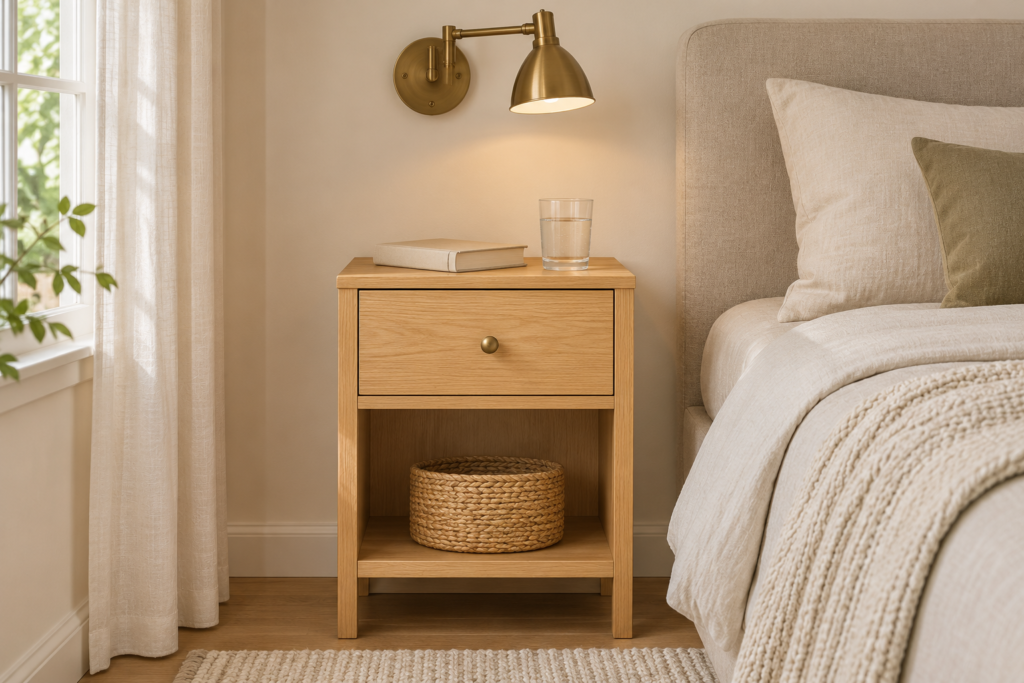
Measure the gap at its narrowest point
Measure from the widest part of the bed frame to the nearest wall or piece of furniture. Then check the space closer to the floor. A baseboard can push a nightstand forward, and a curtain that hangs beside the bed may need room to move. Use the smallest measurement when you compare options.
Say you have a 19-inch gap and you’re looking at a nightstand that’s 18 inches wide. That leaves just one inch of spare room across the entire gap. If the legs flare outward or the listed width refers only to the cabinet body, the piece may sit too tightly against the bed. Check the widest point, including any overhang at the top.
Depth matters just as much as width. Set a cardboard box where the nightstand would go and walk around it as you normally would. Open the closet door, pull out a nearby dresser drawer, and try making the bed. A shallower nightstand may give you more room to move while still holding everything you use.
Find a height you can reach from bed
Measure from the floor to the top of your mattress, including any topper you use. A tabletop close to that height is a practical starting point. Your best height depends on how far the nightstand sits from the mattress and what you need to reach.
Try it with a sturdy surface you already have. Sit where you read, then lie down as you normally would. Reach for your phone or glasses. If you have to twist or sit up to get to them, try moving the surface closer or testing a different height. This is especially helpful if your bed frame has a wide upholstered edge that creates a gap between you and the tabletop.
Give the tabletop one job at a time
Put your usual bedside items on a sheet of paper cut to the dimensions of the nightstand you’re considering. Include the lamp base if you use one. Leave enough room to pick up a glass without brushing your phone or knocking your glasses aside.
If the lamp takes up most of the surface, a wall-mounted reading light can free up space. If you want to keep your current lamp, a shelf or drawer can hold the things you reach for less often. Check where the outlet sits, too. A plug behind the nightstand can make it sit farther from the wall than you expected.
Choose storage you can open easily
One shallow drawer can give glasses, charging cables, and other small items a place of their own. An open shelf works well for books or a basket you can lift out. When comparing drawer models, look for the inside dimensions if you plan to store something specific. A drawer that looks roomy from the front may be too shallow for a glasses case or too short for a paperback laid flat.
In a tight corner, think about how you’ll open the drawer. A deep drawer may be useful, but it also needs room to extend. A shelf can be easier to reach if the drawer would open into a narrow walkway or catch on hanging bedding.
Shop each side of the bed separately
One side of the bed might have room for a drawer and a lamp. The other might only need a narrow table for a phone and a glass of water. If you like a coordinated look, repeat a wood tone or lamp finish across both sides. You can buy one piece at a time as your budget allows.
A side table you already own is worth trying before you shop. If you’re considering a secondhand nightstand, check for wobble, open the drawer all the way, and look closely at the top for loose veneer or water damage. Take your width, depth, and height measurements with you. It’s much easier to pass on an attractive piece when you know exactly where it would get in the way.