The salad bowl is already on the table when someone walks in with a loaf of bread. You slide the water pitcher over to make room, bump a glass, and realize the butter is still in the kitchen. The dining table seats everyone just fine. It’s the food that needs another seat.
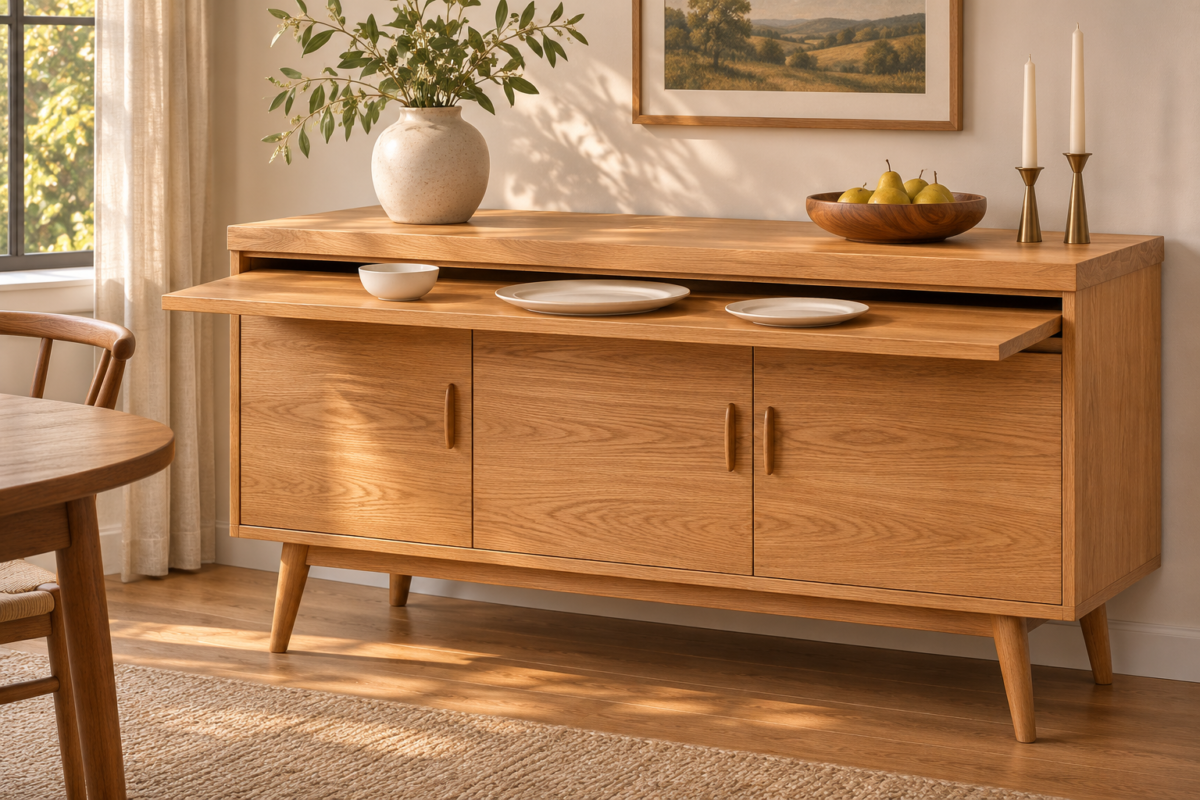
Imagine reaching over to the oak sideboard and pulling out a wide, shallow shelf just under the top. The bread and butter move there, within easy reach. After dinner, you clear the shelf and slide it back into the cabinet. By morning, the room looks exactly as it did before.
That’s the idea behind this dining room sideboard concept. It borrows the motion of a drawer to give a small dining room an extra serving surface for the part of the evening when it needs one.
What the pull-out shelf would do
The sideboard would still have a fixed top and closed storage below for dishes and table linens. The difference would be a flat oak shelf tucked into a narrow slot immediately under the top. Pull it toward you and you’d have a place for a stack of dessert plates, a basket of rolls, or the empty bowls you’re about to fill. Since the shelf sits below the top, you could keep a vase or a lamp where it is.
Width and depth would matter in different ways. A shelf wide enough to spread out a few small dishes would be useful even with a shallow extension. You could reach for what you want without moving one bowl to get to another. The right depth would come from measuring the dishes you actually serve with. A bread basket and dessert plates need a different surface from a deep roasting pan.
For a real version, the furniture maker would need to test the cabinet and the shelf together with the shelf extended and loaded, then specify how much weight it can hold. A stop would keep the shelf from sliding all the way out. I’d also give the front edge a recessed grip so it would be easy to find by touch without adding a handle that sticks out into the aisle.
What if the next course rose out of the cabinet?
The pull-out shelf is the part you’d see. The more unusual idea would be inside. Imagine that the cabinet held a small service lift behind one of its doors. Before dinner, you could load two separate trays through the front. One could hold a second loaf of bread and a little dish of olive oil. The other could hold dessert plates and forks. During the meal, each tray could rise to the height of the open shelf in turn. A section of the shelf would act as a landing, letting you slide a tray into reach without having to bend down and open the cabinet door.
Picture dessert arriving this way. Someone puts the last dinner plate down and you pull the shelf out. A warm light comes on under the lip of the oak top. There’s a quiet pause, then the little stack of plates you loaded earlier appears where the bread was. The coffee can still come from the kitchen. The plates and forks are already together, so nobody has to hunt through three drawers while a guest waits with a cake knife in hand.
I’d make the lift narrow enough that most of the cabinet could stay ordinary storage. It would need its own enclosed compartment, a removable tray for cleaning, and a control you deliberately hold while it moves. I’d also want the serving shelf to work by hand even if the lift were out of service. The real test would be whether you’d use the cabinet on an ordinary Tuesday with the lift switched off. The surprise earns its place when the furniture still makes sense the rest of the week.
Where the idea could get in its own way
A lift would take up space you might prefer to use for serving platters. I’d make room for a shallow tray of small items, since those are the things I tend to collect from several places while setting the table. The cabinet would also need enough room between the shelf and the top for whatever comes up. Tall bottles, hot cookware, and heavy stacks would stay on the fixed counter. A prototype would need testing for stability, moving gaps, and what happens if a tray is loaded unevenly before anyone could use it at home.
There’s a quieter version of the same idea you can try tonight. Put everything for the next course on one tray before you sit down. Keep it nearby, then carry it out when you’re ready. If that one trip saves you from getting up three times, you’ve found what the imaginary lift is really for. It lets the person serving dinner spend a little more of it at the table.
The open shelf has to fit the room, too
Picture the end of dinner, when someone pushes back a chair while someone else is carrying plates to the kitchen. That’s when you find out whether a pull-out shelf earns its space. A cabinet can look slim with everything closed and still make the room feel crowded once a shelf or door is open.
The first measurement I’d take is from the sideboard wall to the back of the nearest chair when someone is seated. Then I’d check the same spot with the chair pulled back. If that’s also the main route to the kitchen, I’d look for a stretch of wall farther from the chairs, perhaps near the end of the table. A sideboard is more useful when you can get to it with both hands full.
Try the idea with your next dinner
Before shopping for a dining room buffet, clear a strip on a surface you already have near the table. Set a tray there and move three things onto it that usually crowd dinner. Bread, the water pitcher, and extra plates make a good first test. Notice what you reach for, who gets up, and whether the new spot feels convenient from both the table and the kitchen.
If you’re considering a cabinet for an empty wall, use painter’s tape on the floor to mark the cabinet’s front edge and where an open shelf would end. Pull out the nearest dining chair and walk the usual route with an empty tray. That quick rehearsal can tell you whether you’d prefer a shallower cabinet, a different wall, or simply a little more room on the sideboard top.
A hidden serving shelf would be handy for the same reason a coffee table with a puzzle tray would be handy. It gives one ordinary activity its own space. In this case, it might be just enough room to leave the bread within reach and sit back down while it’s still warm.